How to Choose the Right Flour Mill for Your Business

Which machine will work reliably for my business?
The right flour mill is not necessarily the largest or the cheapest. It is the one that matches your grain, required flour quality, expected production, available power, space and future plans.
1. Begin With the Flour You Want to Produce
Before comparing machines, decide what you want to sell.
Will you produce whole-wheat atta, multigrain flour, maize or millet flour, besan, packaged flour, or provide custom grinding for local customers?
The answer matters because different grains behave differently during grinding. The machine, millstone setting and required fineness may also change from one product to another.
A neighbourhood atta chakki, a packaged-flour business and a larger commercial plant may all require different solutions.
When speaking to a manufacturer, explain:
- The grains you plan to process
- The flour texture you require
- Your expected daily demand
- Whether several grains will use the same machine
- Whether the flour will be sold loose or packaged
This prevents you from buying a machine that looks suitable on paper but does not match your actual work.
2. Choose Capacity Based on Demand
Many buyers are attracted to the highest capacity available. A bigger machine may appear safer for future growth, but it can also mean higher investment, greater power requirements and unnecessary operating costs.
Start with your realistic daily target.
For example, if you expect to process 600 kg per day and the machine will run effectively for six hours, you need an average output of about 100 kg per hour.
Keep some extra capacity for adjustments, maintenance and future demand, but avoid buying a machine several times larger than your present requirement.
Actual output can vary with grain type, moisture, flour fineness, feed rate, millstone condition, machine configuration and operator experience. Ask for a practical recommendation based on your grain and desired flour, rather than relying only on the maximum capacity shown in a catalogue.
Technical approval required: Confirm model-specific capacity, motor power and expected output with the Pukhraj technical team.
3. Decide Between Single Mills and a Complete Plant
Some businesses need only a flour mill. Others need a complete system.
A single flour mill may be enough when the grain is already clean, production is moderate and flour is collected directly after grinding.
A complete flour mill plant becomes more useful when you purchase grain in bulk, need cleaning or destoning, plan to sell packaged flour, want to reduce manual handling or expect higher production.
A plant may include cleaning, destoning, conveying, milling, sifting and packing equipment. The purpose is not to add more machines; it is to create a smoother production process.
Each component should solve a specific purpose and requirement.
4. Pay Attention to the Millstone
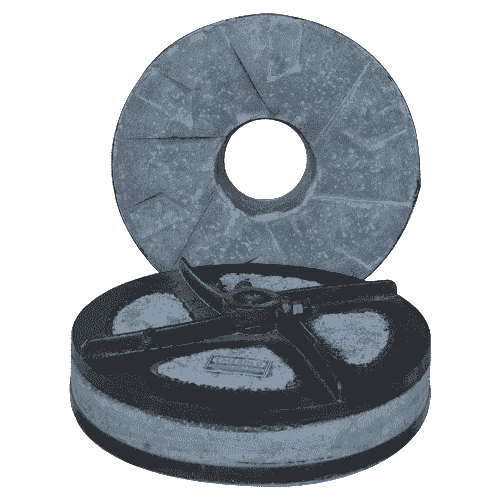
For stone-milled flour, the quality and suitability of the millstone are central to performance.
Pukhraj manufactures emery millstones in different sizes and configurations for Indian and overseas flour mills. However, stone size alone should never guide the decision.
The correct millstone depends on the machine design, grain type, required fineness, expected production, operating speed and fitting dimensions.
When replacing an existing millstone, share clear photographs, exact dimensions, machine details and the product being ground. A small mismatch in dimensions or fitting can affect installation, balance and grinding performance.
5. Consider the Complete Running Cost
The purchase price is only one part of the investment.
A machine that costs less initially may become expensive if it consumes more electricity, requires frequent repairs or causes regular stoppages.
Before buying, compare:
| Area | What to check |
|---|---|
| Power | Required electrical load and motor configuration |
| Maintenance | Cleaning, adjustment and servicing |
| Millstones and spares | Availability and replacement time |
| Labour | Number and skill level of operators |
| Installation | Foundation, wiring and commissioning |
| Support | Service response and downtime |
| Expansion | Whether equipment can be added later |
Ask suppliers to state clearly what is included in the quotation: motor, accessories, taxes, freight, installation and optional equipment.
6. Prepare the Site in Advance
A flour mill needs more than an empty corner in a workshop.
Confirm the electrical supply, earthing, ventilation, dust control, safe access, storage space and room for cleaning and maintenance.
For overseas projects, also confirm voltage, frequency, motor standards, packing, shipping and installation requirements for the destination country.
Planning these details early prevents delays and unexpected costs at and post delivery.
7. Ask These Six Questions
A good supplier should first understand your requirement and then recommend a solution.
- Is this machine suitable for my grain and desired flour?
- What output can I realistically expect?
- What electrical connection and motor are required?
- What cleaning and maintenance will be needed?
- Which spare parts should I keep available?
- Can this setup be expanded later?
The quality of the answers often tells you as much as the machine specification.
Final Buying Checklist
Before confirming your order, make sure you know:
- What you will produce
- How much you expect to sell
- Which grains you will process
- Whether grain cleaning is required
- Your available power and space
- The full installation and operating cost
- The service and spare-parts support available
- How the setup can grow with your business
Do not buy a flour mill only on the basis of price, horsepower or maximum capacity. A well-matched machine is more valuable than an oversized machine that does not suit your operation.
Frequently Asked Questions
Which flour mill is suitable for a small atta chakki business?
It depends on local demand, operating hours, grain type, available power and required flour fineness. Start with your expected daily production and choose a machine with a reasonable growth margin.
Do I need grain-cleaning equipment?
If you process small quantities of already-clean grain, basic cleaning may be sufficient. Bulk grain or packaged-flour production may require cleaning, destoning and metal separation.
How much electricity does a flour mill use?
Electricity use varies by motor size, load, grain, moisture, feed rate and flour fineness. Confirm the expected consumption for the specific model and application.
Choosing a Pukhraj Flour Milling Solutions
We manufacture emery millstones, flour mills and offer turnkey solutions for customers across the globe.
The right solution begins with understanding your grain, required output, site conditions and business plans.
To discuss your requirement, contact the our team today:
WhatsApp: +91 9636411526 Email: pukhrajsales@gmail.com